
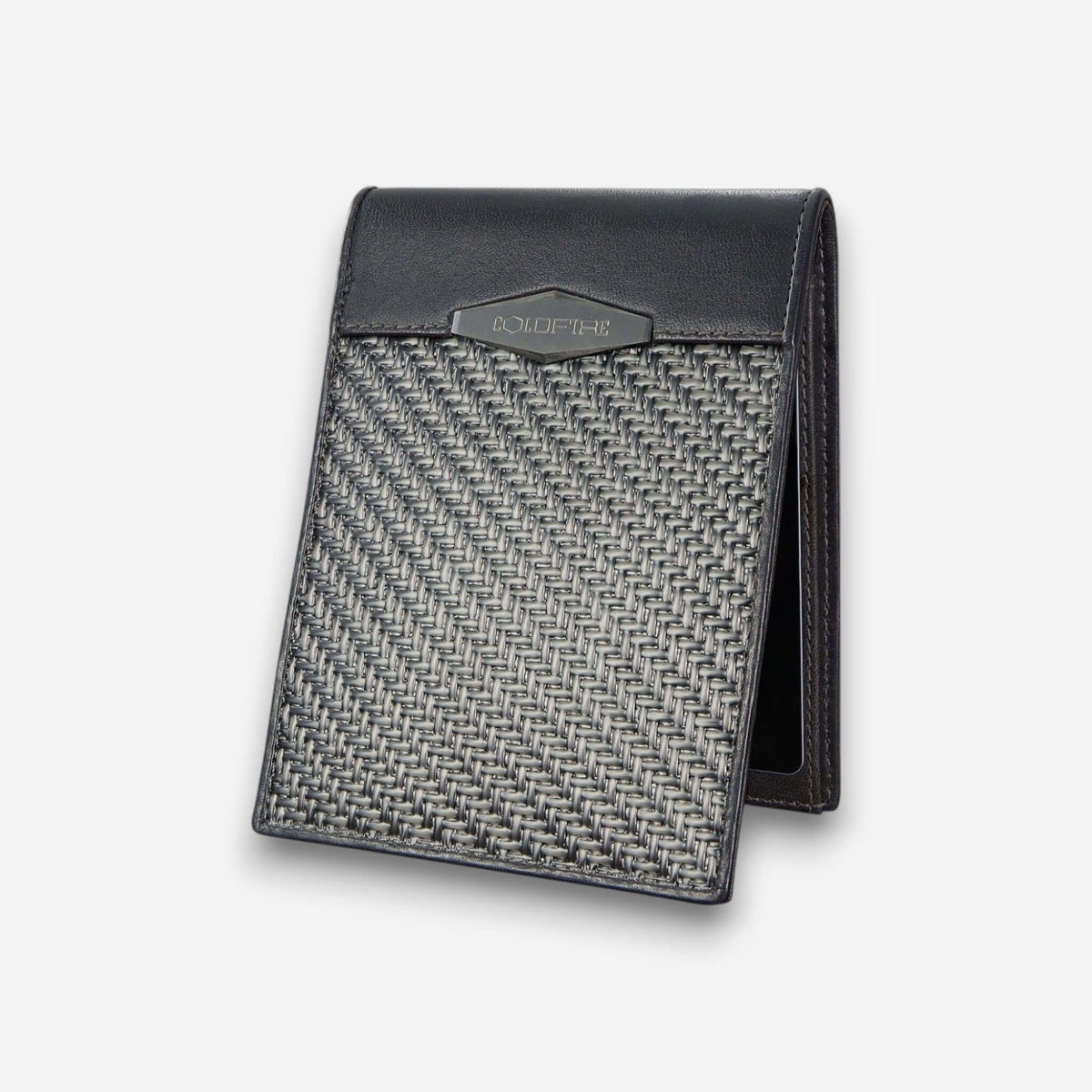
A leather wallet stretches because cowhide is a fibrous material under compression. Load it with cards, sit on it repeatedly, and the fibres yield. The wallet grows thicker, wider, and loses its original profile. The pocket gets tighter. The jacket line breaks. The short answer to "how to stop it" is to choose a wallet built on structural materials rather than soft leather alone.
If you are already carrying a traditional bifold, the options are limited to a trim, meaning fewer cards, or a swap. The rest of this article explains why cowhide fails under daily carry, what materials actually hold their shape, and how to recognise a wallet that will not grow before you buy it.
The brick problem, explained
Most men do not notice the change week to week. A wallet that arrived at 6mm grows to 9mm, then 12mm. The cards stay the same thickness. The wallet grows around them.
This is not poor craftsmanship. It is cowhide doing what cowhide does. The leather stretches to accommodate the load, then settles in the deformed position. Heat from a back pocket accelerates the process. Moisture from sweat accelerates it further. After six months of daily carry, a full-grain bifold that started slim looks like it swallowed a paperback.
The consequences are practical. A wallet that thickens in a back pocket creates uneven pressure when you sit. In a front pocket, a stretched wallet prints through dress trousers. Under a jacket, a breast pocket wallet that has grown rounds the chest line.
The problem has a name in premium leather goods circles: wallet spread. Makers have tried stitched ribs, wax treatments, and compression frames. None of them hold for long, because they are treating the symptom. The cause is the material.
Why cowhide yields under card load
Cowhide is a fibrous structure held together by collagen. The loose weave gives leather its suppleness and characteristic feel. It also gives it directionality: leather stretches most across the grain, which is precisely the axis under compression in a card slot.
Card slots apply constant lateral pressure. Every insertion and removal is a flex cycle. Over time the fibre matrix fatigues. The grain layer thins. The flesh layer, which has less structural integrity, deforms first. The wallet profile grows.
Thickness is not the only variable. A bifold stretched across its width also widens. The stitching holds the panels together but cannot hold the leather itself in shape. Eventually the card slots loosen. Cards sit at an angle. The wallet no longer closes flat.
Premium tanning and heavier weights of cowhide slow this process. They do not stop it.
What actually stays slim: structure, not compression
The solution is not to compress the leather harder. The solution is to remove leather from the structural equation.
A wallet stays slim when its walls resist lateral pressure. That requires a material with compressive stiffness: rigid or semi-rigid, able to distribute load across the face of the wallet rather than concentrate it at the card slot edge.
Carbon fiber does this. The woven structure of carbon fiber composites has a high fibre volume fraction. Load applied at one point is distributed across many fibres simultaneously. The material does not yield in the same way cowhide does. It returns to its original shape after each flex.
The critical variable is flex resilience. A material that is rigid but brittle would crack rather than return. The engineering challenge in a slim wallet is to find a composite that is stiff enough to resist deformation and flexible enough to survive years of daily carry. That is not standard carbon fiber sheet. It is an engineered flexible carbon composite, processed specifically for repeated bending without delamination.
Kangaroo leather, used on the exterior facing, adds a different kind of resistance. The fibre bundle density in kangaroo hide is substantially higher than in cowhide. More fibres per unit area means less room for individual fibres to shift under load. The leather surface holds its grain. The panels do not spread. The profile stays clean.
Carbitex and K-Leather: the structural answer
COLDFIRE uses two materials for the wallet body. Carbitex OmniFlex (CX6), a flexible carbon fiber composite made by Carbitex, Inc. of Kennewick, Washington, and K-Leather, kangaroo hide from Packer Leather in Australia, a tannery operating since 1891 and named International Tannery of the Year in 2014.
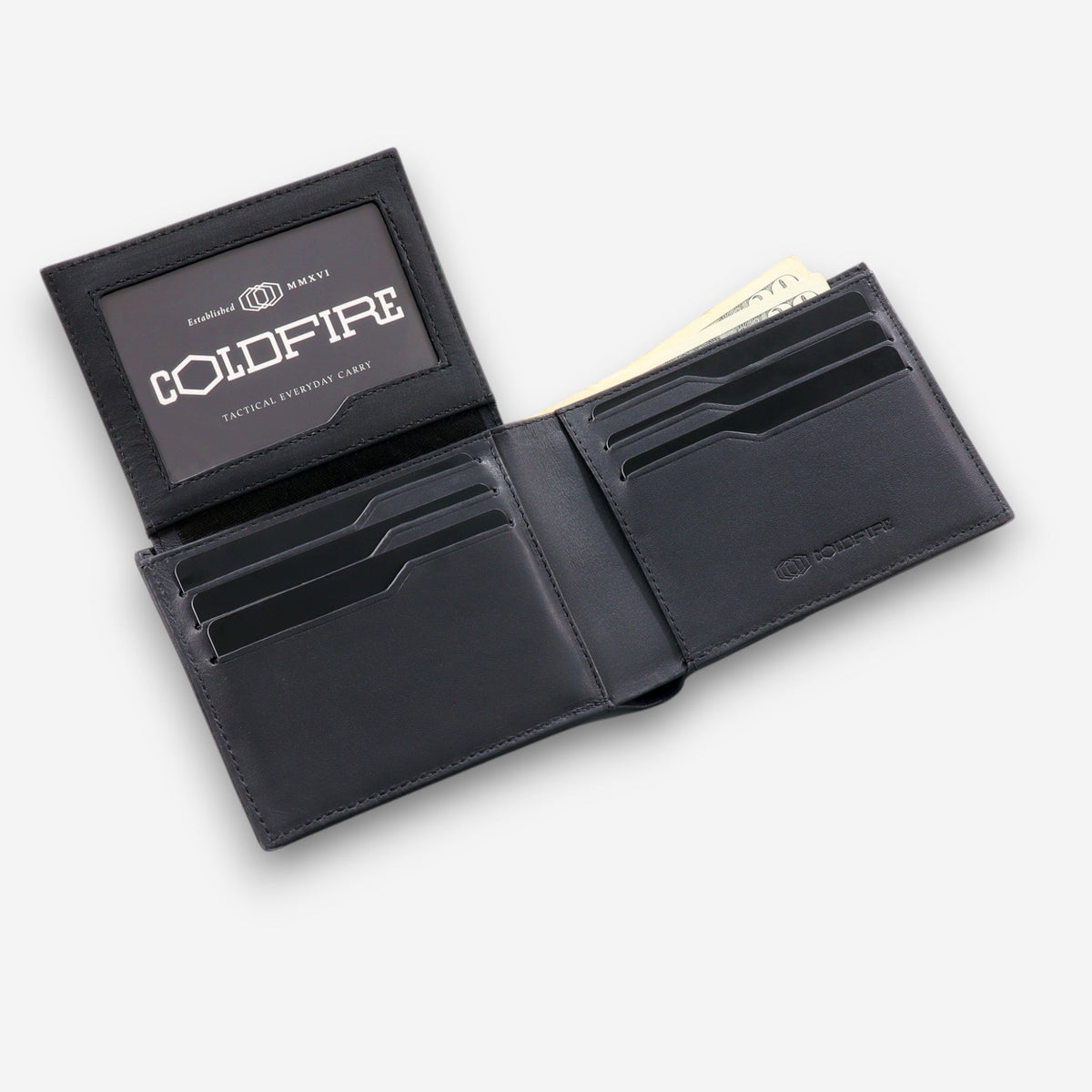
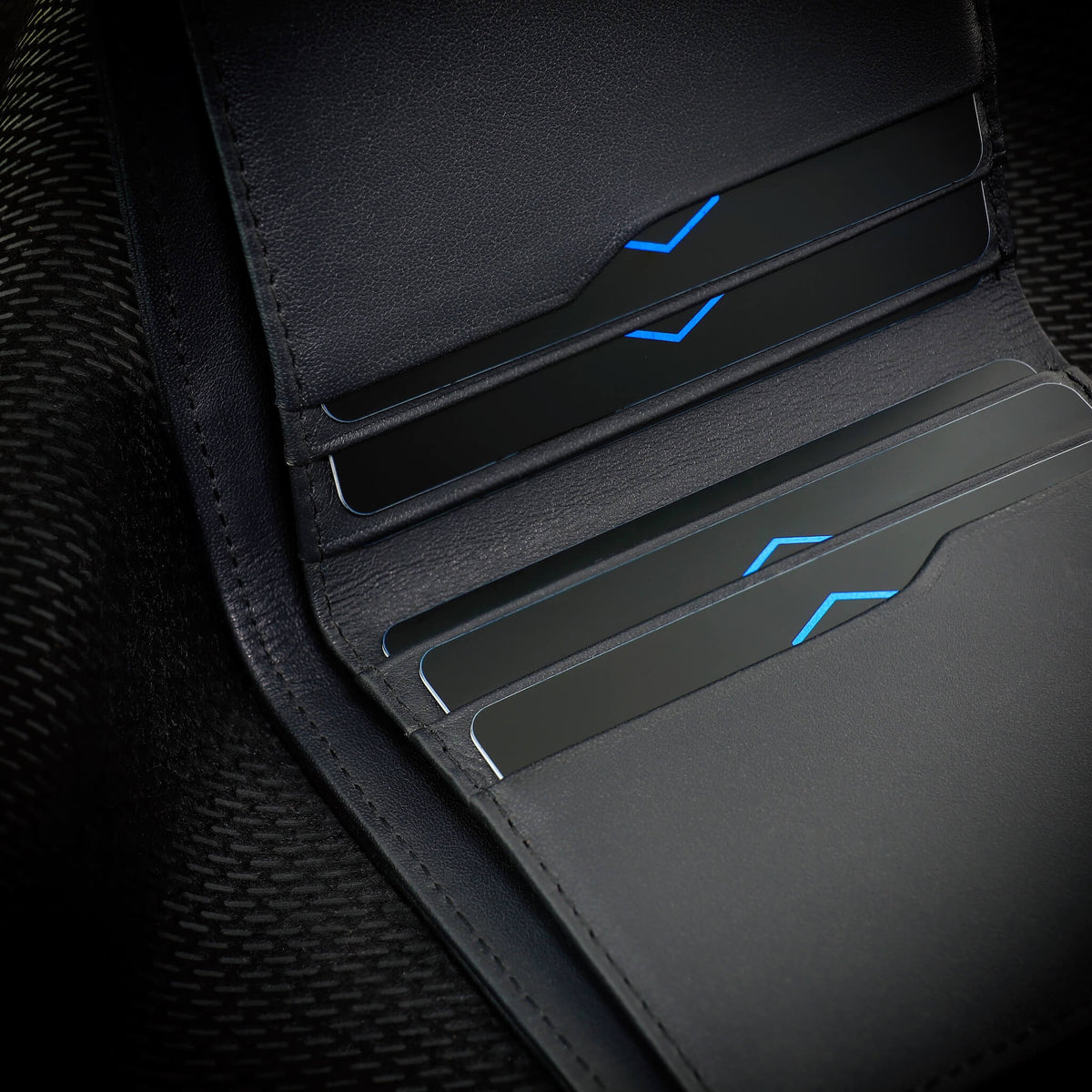
Carbitex OmniFlex was developed for applications where flexibility and stiffness must coexist at low weight. It bends without delaminating, returns to shape under cyclic loading, and maintains its face dimensions under sustained pressure. In a COLDFIRE wallet, it forms the structural shell that the card slots are set into. The cards press against carbon fiber, not leather. The leather never carries the structural load.
K-Leather wraps the exterior. The higher fibre density means the wallet face does not develop the loose, baggy texture that cowhide develops over years of carry. The grain stays tight. The surface stays firm.
Both materials are worked by hand in Plovdiv, Bulgaria. The construction joins them with AMANN Strongbond bonded thread, certified to OEKO-TEX Standard 100, and a Dyneema ripstop lining at stress points.
Every material, with its named maker, grade and certification, is listed on the Engineering and Quality page, and each one is explained in function on the Materials page.
Proof: a wallet at day 1000
Technical arguments have limits. What convinces most people who switch is the owner evidence.
The Owners page documents wallets at multiple years of carry. The wallets shown are not lightly used display samples. They are daily carry: cards, notes, receipts, front pocket and breast pocket, years of open-and-close cycles under real conditions. The profile in the photographs is the profile that left the workshop.
One verified owner posted photographs of a Strike Core after four years of regular use, with a single line: still in great condition. Four years is roughly 1,400 days in a pocket.
"Day 1. Day 1000. No difference." is not a marketing claim at COLDFIRE. It is a description of what the photographs show.
Ten thousand flex cycles is the testing benchmark behind it. That number corresponds to roughly eight years of daily use at four open-and-close cycles per day, with zero change in profile at the end of the cycle count. The measurement is dimensional, not subjective.
The difference between this and a cowhide wallet is not a matter of degree. It is a matter of mechanism. Cowhide will yield under sustained load because its fibre structure is built for flexibility, not resistance. A Carbitex OmniFlex shell, built as a structural panel with kangaroo leather facing, is not.
How to choose one that lasts
If you are shopping for a slim wallet that will hold its shape, the questions to ask before you buy are practical.
What is the structural material? Leather-only wallets, regardless of grade or tanning method, will eventually deform under card load. A slim wallet that holds its shape long-term requires a non-yielding structural element: carbon fiber, aluminium, or a titanium frame around the card slots. Ask what the shell is made of, not just what covers it.
What is the closed profile, in millimetres? A wallet that opens at 5mm and closes at 6mm is structurally different from one described as "stays slim" at 9mm. The Strike Core closes at 6mm with six cards loaded. Ask for a number, not a description.
Does the brand show long-term carry evidence? A photograph of a new wallet tells you nothing about how it ages. An owner photograph at two or three years of daily carry tells you most of what you need to know. If a brand cannot produce those photographs, draw your own conclusions.
What is the cash carry arrangement? A wallet that holds cards without bulge but requires folded notes to be jammed loose into a back pocket has solved one problem and created another. Look for a wallet with a dedicated bill pocket that carries full-size notes flat, without adding to the closed profile.
The Strike Series is built on Carbitex OmniFlex panels with K-Leather facing. The closed profile starts at 6mm. Every COLDFIRE wallet carries a five-year structural guarantee written specifically against stretching, swelling and loss of shape under normal use within its stated card capacity. The owner evidence runs longer still.
If your current wallet has thickened since you bought it, you already understand the problem. The question is whether the next one is built to avoid it.

Share:
Five Red Flags on a Wallet Product Page
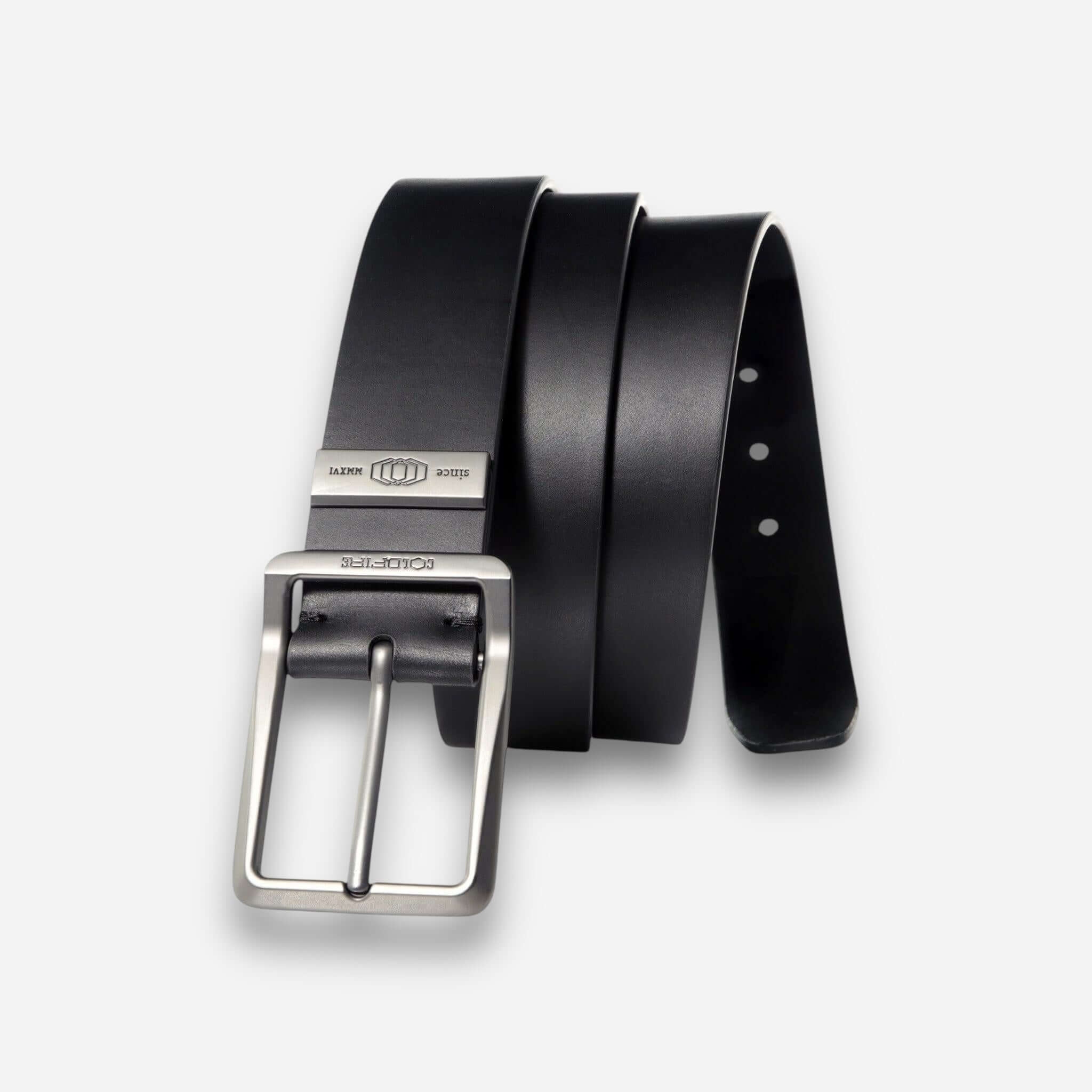
Men's Leather Belts: How to Buy One That Lasts